Strong Muscles… But Are Your Bones at Risk of Misalignment?

Health-Conscious Doesn’t Always Mean Risk-Free
Today, more people are paying attention to their health—and that is undoubtedly a positive and worthwhile investment. At first glance, it may seem that those who exercise regularly have little to worry about.
But in reality, this group may actually be at a higher risk of developing structural imbalances than people who use their bodies more moderately.
Why is that?
Today, Fitzio Clinic would like to invite you to explore another side of exercise. You may even discover that you are part of this group without realizing it.
When Good Intentions Unintentionally Harm the Body
Imagine this scenario.
A man has worked at a computer for many years, starting from a young age. Over time, these habits gradually alter his body structure—leading to tightness in the neck, shoulders, and upper back, along with a rounded posture he may not even notice.
One day, he decides to make a change. He wants a strong, healthy physique, so he begins going to the gym, lifting weights, and training seriously.
The problem is this:
He is exercising on a body that is already structurally imbalanced.
Even though he tries to stand taller and straighten his posture, long-standing muscle tightness forces his body to compensate. Every movement requires effort and strain.
The result?
Muscles do become stronger
But the underlying structural issues remain
Restricted joints are not corrected
Added weight training places even more stress on the joints and spine
Over time, the rounded posture may worsen—eventually leading to injury.
Why “Fit but Misaligned” Can Be More Risky
For people who do not exercise intensely, structural changes tend to occur slowly.
However, exercising heavily on an imbalanced body accelerates dysfunction—making problems develop faster and more severely.
You may have heard stories of athletes or fitness influencers who trained with heavy weights for years, only to later discover spinal issues or serious injuries that required long recovery periods, with uncertain outcomes.
Wouldn’t it be better to prevent these issues from the beginning—rather than losing time, money, and long-term health?
Our Approach at Fitzio Clinic
We deeply understand athletes and fitness enthusiasts. That’s why we design specific programs for this group.
We know you are disciplined, motivated, and committed. With the right care, you can go much further than you think.
Our Care Process
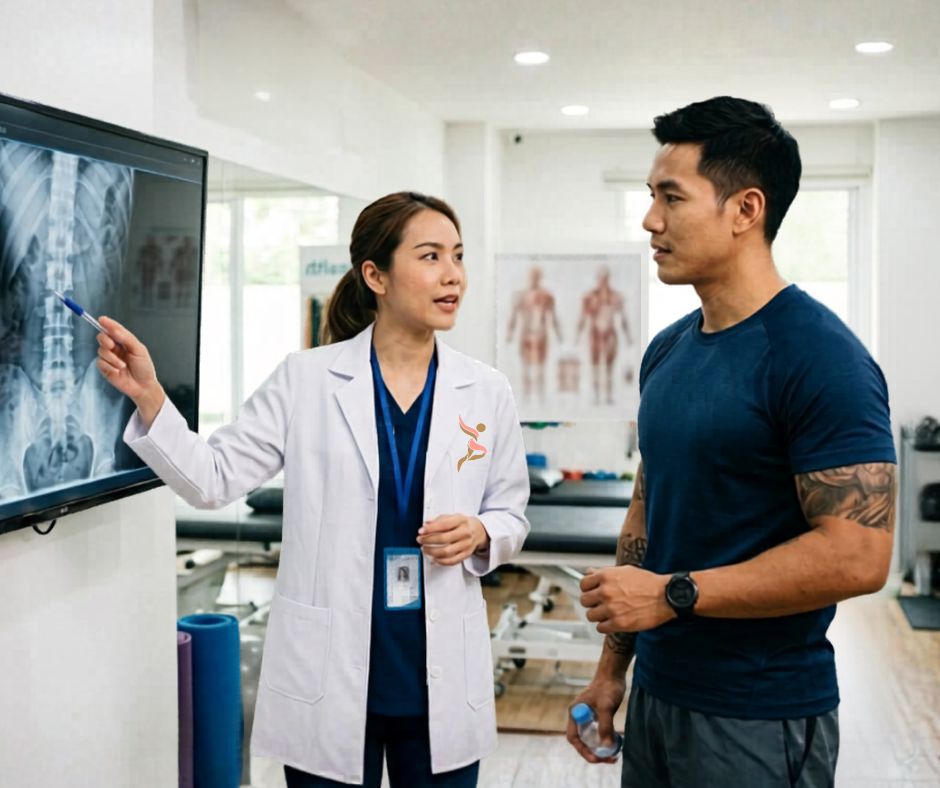
1. Comprehensive Physical Assessment
Structural analysis (left–right, front–back balance)
Evaluation of posture and long-term movement habits
2. Structural Problem Analysis
Identification of chronically tight or restricted muscles
Assessment of injury risks related to exercise
3. Release of Muscle and Joint Restrictions
Specialized hands-on techniques and trigger point therapy
Personalized use of therapeutic modalities suited to each individual
4. Proper Body Preparation and Movement Education
Targeted stretching techniques
Breathing patterns
Key focus points during exercise
This allows the muscles and nervous system to relearn correct movement patterns.
What You Will Gain
Clear understanding of your body’s current condition
Awareness of your personal risk factors
A body “cleared” of restrictions and tightness
Improved flexibility and exercise performance
Reduced risk of sports-related injuries
Most importantly, you will develop a body that is not only strong—but structurally balanced.
With Fitzio Clinic’s physiotherapists guiding and supporting you every step of the way, you can feel confident that your journey toward strength and performance is safe, sustainable, and future-proof.
Prepare Your Body for Long-Term Success
Build strength on a solid foundation—so you never have to come back and fix what could have been prevented.
Other Articles

Body and Mind: An Inseparable Connection

Tried Many Treatments But Still Not Getting Better?

Looking Down at Your Phone All Day? Neck, Shoulder, and Upper Back Pain Could Lead to a Hunched Posture!

How to Fix Rounded Shoulders and a Hunched Back (Upper Crossed Syndrome)

“Stress leads to pain, and pain leads to stress.”
Physical therapy is much closer to everyday life than you might think.